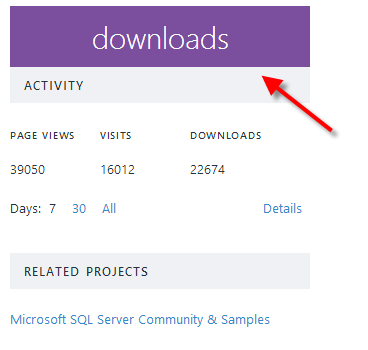
1. Type in the following URL into your browser's address bar http://msftdbprodsamples.codeplex.com/ 2. Click on the "Download" button on page 3. Click on the recommended download link 4. Unizp the file you just downloaded 5. Open the SQL Server Management Studio, then right click on "Databases" and then select "Restore Database" 6. Select "Device" under "Source" 7. Click on the "..." button, and the "Select" backup devices will appear, select "File" for "Backup media type" 8. Click on the "Add" button, and select the "AdventureWorks2014.bak" file, then click "OK" 8. Click "OK" on the "Select backup devices" screen 9. Click "OK" on "Restore Database" window 10. A message will pop up that says you have successfully restored the AdventureWorks2014 database 11. The "AdventureWorks2014" database is now ...
In the previous post we installed Docker on our Ubuntu server. Now we are going to add the Docker repository to our local server so that we can get the latest version of Docker. Step-By-Step Instructions: Open the terminal command line tool and switch to root user with the sudo su command 2. Now we have to add the Docker repo key to our local machine by typing the following command wget -qO- https://get.docker.com/gpg | apt-key add - 3. The next command is to add the Docker repository to the Ubuntu repository source list. Type the following command into the terminal: echo deb http://get.docker.com/ubuntu docker main > /etc/apt/sources.list.d/docker.list 4. Now type apt-get update to get the latest updates from the Docker repository. If you haven't ran update for a while. This might take a while. 5. After the update has completed type docker -v to the version number
In our previous blog posts we ran containers with the Fedora and CentOS images. In this blog we are going to run a command to see which containers are running in our host system. To get a list of all the containers running on our host Ubuntu system we type in the command docker ps -a command.


Comments
Post a Comment